
Rule of thumb: if you still open the big door more than once a week, it's still a garage door and needs to be treated like one — not like a wall you drywalled over. The exceptions are converted spaces where the door is permanently sealed shut, workshops that run heavy vibrating equipment, and gyms with rubber flooring that changes the floor height at the threshold.
Why This Argument Keeps Happening
One spouse wants a finished gym or office and doesn't want to think about the door again. The other still wants to park a car or pull tools in and out on weekends. Both are right about different things, because a garage conversion changes three things at once: the weight on the door, the airflow around the opener, and how much heat the whole assembly sits in.
What Changes When You Insulate or Drywall the Door Itself
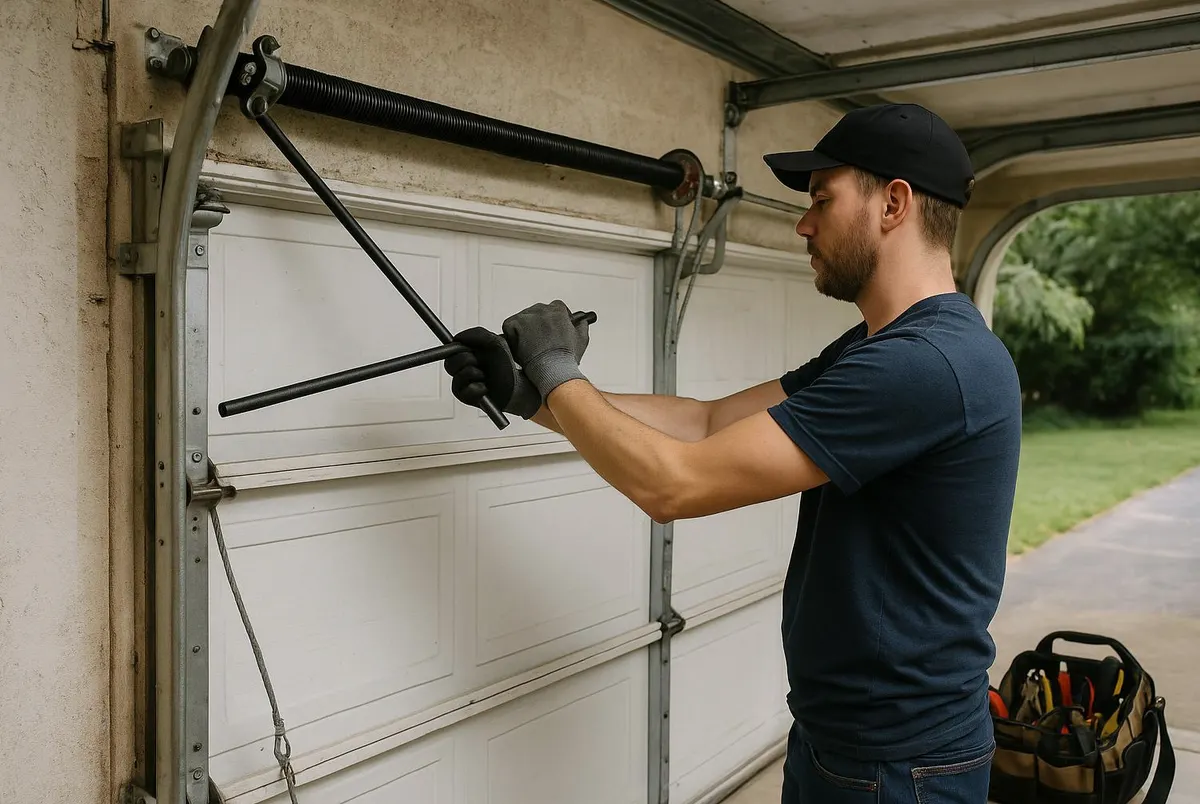
Adding rigid foam board and drywall to the inside face of the garage door is a common DIY move to keep a gym or home office livable through the summer. It works for comfort, but it adds real weight — sometimes 20 to 40 pounds depending on the door size and materials. The torsion springs were calibrated for the original door weight. A heavier door means the springs now work harder every cycle, wear out faster, and the opener strains more to lift it. If the door suddenly feels heavy to lift by hand, or the opener starts groaning or reversing partway up, that's usually why.
Sealing It Up Changes the Air Around the Opener
Weatherstripping the perimeter and adding a solid threshold seal is smart for keeping conditioned air in a converted room. But in Henderson's dry heat, a garage that used to vent some heat out through gaps now holds it in instead — right where the opener's motor and logic board live. Openers are already stressed by summer heat; sealing the space without adding any ventilation or insulation above the door can push the garage even hotter during peak months, which shortens the life of the opener's electronics and cooks the lubricant on the rail faster than before.
Workshops: Vibration Is the Hidden Problem
A drill press, table saw, or compressor bolted to the same slab as your door tracks will transmit vibration through the concrete. Over months, that vibration backs out the lag bolts holding the track brackets to the framing. You'll notice it as a new rattle, a door that seems to wobble slightly in the tracks, or a track bracket that's visibly loose. It's a simple fix if caught early — tightened or re-anchored brackets — but ignored long enough it leads to a track pulling away from the wall.
Gyms and Rubber Flooring: Watch the Threshold
Interlocking rubber gym tiles typically add a half-inch to an inch of floor height. That's often enough to change how the bottom seal meets the floor, letting in dust during monsoon storms or cool air on winter desert nights. If the door still opens for equipment deliveries or airflow, check that the bottom seal still makes full contact after the new flooring goes in.
If the Door Is Never Opening Again
Fully converted spaces where the door stays shut permanently are the one case where you can stop treating it like an active door — but only if it's actually disabled properly. A door left under spring tension with a disconnected opener is still a hazard if someone bumps the release cord. If you're going that route, the springs should be de-tensioned and the door secured, not just left as-is.
When to Call Henderson Garage Door Service
If you've already added weight to the door, noticed new noise since a workshop tool went in, or your opener seems to be struggling more than it used to, that's a job for Garage Door Maintenance — rebalancing spring tension and resetting the opener's force settings for the new load. If you're planning the conversion and want the door insulated correctly from the start without overloading the hardware, our Garage Door Installation team can spec a door and opener combination built for the extra weight and Henderson's heat instead of retrofitting one that wasn't.
Settle the argument with a quick inspection instead of a guess — call Henderson Garage Door Service and we'll tell you straight whether your door needs a fix now or can wait.